Thursday, May 22, 2014

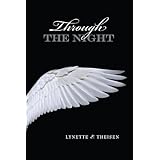
Through the Night

Bibliography
Theisen, Lynette E. Through the Night. Dallas: The P3 Press, 2010. Print.
image from:http://ecx.images-amazon.com/images/I/41ZSBNUkasL._AA160_.jpg


My Thoughts:
A student loaned me this book to read. As often as I make recommendations to her, I was happy to oblige and read this, one of her "favorite books ever!"

Renee is a high school student bound for Harvard. She is not popular, pretty (she thinks) nor does she have a boyfriend--until the mysterious Italian new student arrives in her town. From there, things get a little ridiculous, cliched and unbelievable.

As I read this book, I realized why this book was self-published. It wasn't a horrible story, but it was full of bad writing. There were so many cliches that I was distracted. I would read sentences and think, "the author must be adding all of this description because her writing workshop said, 'add description.'" I'm not sure who Theisen's intended audience is with this book. At times she wrote the characters to be more adult. Then I'd read something that I thought, "sure, teenage girls would buy into this fantasy."

I was also bothered by the shifts in narrator. Most of the story is told from Renee's point of view. Then, it switches to a third person omniscient narrator that I guess was to propel the story. There also is an italicized conversation between two unnamed characters that showed up occasionally. At first, I thought is was Satan and one of his followers. However, later in the book, it seemed like God and an angel. I was confused.

One thing I did enjoy about the book was the mom's faith. She is strong and has a sense of peace about her, but did Theisen have to include cancer with this character? I think that was manipulating the reader. Maybe that's what I don't like most about this book. I would define this book Christian fiction (there are many scripture references and the main plot is God vs. Satan and good vs. evil). I wondered about the author's motivation. Did she write this and include the scriptures so that people would feel compelled to like the book (who wants to argue that a book filled with scripture is bad?)?

I think the story needs some more work. I also think that I've read this story before now.

Thursday, May 8, 2014

Code Name Verity

Bibliography
Wein, Elizabeth. Code Name Verity. New York: Hyperion, 2012. Print.
image from:  http://cf.foreveryoungadult.com/_uploads/images/24099/codenameverity__span.jpg


My Thoughts
Plot summary from the book jacket
"When 'Verity' is arrested by the Gestapo, she's sure she doesn't stand a chance. As a secret agent captured in enemy territory, she's living a spy's worst nightmare. Her Nazi interrogators give her a simple choice: reveal her mission or face a grisly execution.

They'll get the truth out of her. But it won't be what they expect.

As she intricately weaves her confession, Verity uncovers her past, how she became friends with the pilot Maddie, and why she left Maddie in the wrecked fuselage of their plane. On each new scrap of paper, Verity battles for her life, confronting her views on courage, failure, and her desperate hope to make it home. But will trading her secrets be enough to save her from a merciless and ruthless enemy?"

This was a hard book to read. The content wasn't difficult--following what was happening was. This is a story of a Scottish (NOT ENGLISH!) interrogator who has been captured by the Nazi's in France. She is to write down everything she knows. It was confusing because the text moves from present to past without much indication of what time the reader is in at the moment. There were a few visual breaks in the chapters, but not enough for me. It was also difficult following along because this woman "spy" often writes about herself in the third person. "I had not even noticed I was doing it until he [von Linden] asked" (Wein 58).

She writes about what is happening to her in the defunct hotel, Chateau de Bordeaux. She writes about what she hears happening to other prisoners.  She writes about what will happen to her "if I do not produce a satisfactory report in the time allotted--I will be sent to a place called Natzweiler-Struthof" (Wein 113). I've been there! It is a lesser known concentration camp located in France, mostly used for political prisoners. It was strange for me to actually read about this place in a fiction book. I think this gives credibility to the story.

"I am in the Special Operations Executive because I can speak French and German and am good at making up stories, and I am a prisoner in the Ormaie Gestapo HQ because I have no sense of direction whatsoever" (Wein 6). This is what the reader sees about the narrator early in the book. As I finished Part 1 (the first 200 pages of the book), and started writing this blog, I realized that even from page 6, I was not trusting the narrator. She tells us that she is good at making up stories. We should believe her. After finishing this part of the tale, I still didn't know if what I read was true or not, even though Queenie/Eva/Julia writes, "I have told the truth" over and over on the page (Wein 202). Page 162 provides some truth and page 199 gives her real, complete name!

This book is really two tales: Queenie/Eva/Julie/Katharina/Verity and Maddie/Kitty Hawk, a WAAF radio operator who wanted to be a pilot (Wein 30). Part Two of the book (beginning at page 207)started filling in the holes of part one's story. I began to see how it all came together to make a complete tale. Oh, a complete tale, indeed!

Maddie is a pilot and has flown many missions. One such mission ended in Julie evacuating the plane. Seeing Maddie's side of the story was great. I can't wait to see how Wein ties this all together. One thing that Maddie worries about while waiting in France is that she is Jewish. She worries that if she's caught, "I don't think Hitler will let me off for being godless" (Wein 215). She also worries and wonders about Maddie. "The missing face has been sucked into the engines of the Nazi death machine, like an unlucky lapwing hitting the propeller of a Lancaster bomber--nothing left but feathers blowing away in the aircraft's wake, as if those warm wings and beating heart had never existed" (Wein 227). What wonderful imagery in spite of the truth about it.

Maddie's lists of ten things she's afraid of has changed from Queenie's version earlier in the book. The lists appear on pages 53 & 223.

I have just finished the book (I wrote this post in stages so I wouldn't forget the story). OH MY! I am thrilled with how Wein created this tale. I kept flipping back into Queenie/Eva/Julie/Katharina/Verity's story to fit the pieces together. Not all is at it seems and some things that seemed insignificant became vital pieces to the story. I was shocked at several things that are explained in the second part of the book. I don't want to spoil the story here.

If you read this book, stick with it to the end. 

Tuesday, April 22, 2014

The Elite

Bibliography
Cass, Kiera. The Elite. New York: Harper Teen, 2013. Print.
image from: http://www.kieracass.com/books/


My Thoughts

This is the second installment of The Selection series. America was chosen for the top six candidates to become Prince Maxon's wife, and eventual queen of Illéa. She is conflicted. Does she want the job, or does she want Aspen? It's hard to choose when both men are in the castle. As Aspen points out, "Sometimes I feel like Maxon and I are in our own version of the Selection. It's just him and me...Maxon doesn't exactly know we're competing, so he might not be able to try as hard...It's not really a fair fight either way" (Cass 210). When she's with one, she thinks he's her answer. Then the other guy shows up, and her decision is conflicted. America's maid Lucy explains love best. "You know that you've found something amazing, and you want to hold on to it forever; and every second after you have it, you fear the moment you might lose it" (Cass 62).

"Love is beautiful fear" (Cass 62).

What will America do? We don't get the conclusion yet (May 6, 2014, is when the last book releases). But this bridge book did not disappointed. We learn much more about the royal family and what grit America really has in her.

Now stuff from the story--
Maxon trusts America.  He trusts her so much that he shares with her a secret library. America is intrigued. "'What do the red slashes mean?' I asked in wonder. 'Those are banned books. As far as we know, they may be the only copies that still exist in all of Illéa'" (Cass 20). As a teacher/librarian, I'm always interested in the topic of banned books. Why do we "ban" them? Is it for control? Is it really to protect ideas or protect the reader? I think the king is absolutely protecting himself (and his privilege) by keeping these old ideas locked away in the castle. I'm glad that Maxon gave America Gregory's diary to read. This book will provide a much needed perspective on Illéa's history.

Maxon surprises the Elite by allowing them to have their families come for a visit to the royal palace and celebrate Halloween, a festival that hasn't been celebrated in a long time, and one learned about through Gregory's diary. At the party, Maxon meets the families and must eliminate one girl. As it turns out, two girls are excluded (and one girl's story was quite surprising!).

We see that things are changing in Illéa. Sometimes changes have to be slow and secretive. People often do things that might seem exactly the opposite of what they are doing. (America was furious at Maxon for allowing a punishment to be carried out, but she later learns that in perspective, the punishment was not as dire as America believed it to be).

There was a rebel invasion at the castle. America escaped by climbing into a tree. She is seen and given a curtsy. Things are changing, and it seems America has the "peoples'" support.

When America needs some boost in confidence, her dad's letter does the trick. "If you want the crown, America, take it. Take it. Because it should be yours" (Cass 187). Well said, Dad!

Speaking of dads, boy, the king is surfacing as an abusive tyrant. Can't wait to see how Cass changes things in the kingdom (I hope) once Maxon becomes king. Again, May 6 is release day.

Tuesday, April 15, 2014

Galloway's Book on Running

Bibliography
Galloway, Jeff. Galloway's Book on Running, 2nd Edition. Bolinas, CA: Shelter Publications, 2002. Print.

image from: http://www.shelterpub.com/_fitness/_running/gbr2_cov-648H.jpg


My Thoughts
As a new runner, I appreciate Galloway's simplicity. He explains every facet of how to be a succesfful, injury free runner. This is the 2nd book I've read that Galloway wrote. He covers every topic--how to get started--training--racing--tuning--injuries--food--shoes--start to finish--and even includes a page about predicting your race performance. I like the personal stories and testimonials that Galloway includes to reiterate his points. I feel confident when I run because I know I'm doing it "right."  

Friday, March 28, 2014

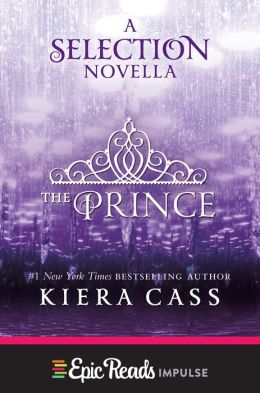
The Prince: A Selection Novella

Bibliography
Cass, Kiera. The Prince: A Selection Novella. New York: Harper Teen, 2013. Kindle file.

image from: http://img2.imagesbn.com/p/9780062248169_p0_v3_s260x420.JPG

My Thoughts
This novella is the beginning of The Selection as told from Prince Maxon's perspective. VERY GOOD!

I was interested to see how nervous he was about this contest between girls to become his wife. His parents are more present in this story and what kind of people they are (I suspected I wouldn't like the King from the first book. Seeing him through his son's eyes doesn't change my opinion).

I hadn't thought about America, a Five, being a "throwaway pick" (Location 362). I was glad to read that he is a bit smitten with America. "This girl was the antithesis of everything I'd been expecting" (Location 514).  He describes her as a "walking rebellion" (Location 686).

When I read The Selection, I didn't keep close tabs on each girl (their name, description, social status), but reading this story, I noticed that even the overwhelmed Prince makes some distinctions. "I imagined Kriss next to Celeste, and thought of them as opposites" (Location 680).

I hope to start the next book in the series, The Elite this weekend. I'm very glad I took a chance on this series. It is refreshing to read a "chick lit" book that isn't so sappy and contrived.

Thursday, March 20, 2014

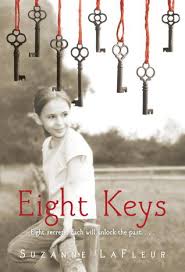
Eight Keys

Bibliography
LaFleur, Suzanne. Eight Keys. New York: Scholastic, 2011. Print.

image from: http://d202m5krfqbpi5.cloudfront.net/books/1333578048l/13121561.jpg

My Thoughts
Twelve year old Elise (Cricket) lives with her Aunt Bessie and Uncle Hugh. Her mom died in childbirth and her dad passed away a few years later from cancer. Elise does not have a great first day at middle school thanks to her locker partner Amanda Betterman. Her best friend Franklin suddenly becomes a "loser" that Elise tries to disassociate from so she won't be picked on by Amanda and friends.

The rest of the school year just gets worse.

One day, though, Elise finds a key with her name on it in the barn. Uncle Hugh's barn is really a craftsman workshop, but she's never been allowed upstairs--until now when this key will unlock one of the 8 rooms. She enters the first room to find a message from her deceased father. Yes, he had the foresight to create this gift for Elise before the cancer killed him. As the days pass, she finds more keys to unlock more rooms. Each room is giving Elise a sense of who she is, where she comes from and who she might be as she grows up without her parents, but still surrounded by people who love her.

The book is divided into three parts and told from Elise's first person point of view. This was a thoughtful story that made me think about friendships and how family isn't always defined by blood relation.

Sunday, March 16, 2014

The Silver Star

Bibliography
Walls, Jeannette. The Silver Star. New York: Scribner, 2013. Print.

image from: http://media.npr.org/assets/bakertaylor/covers/t/the-silver-star/9781451661507_custom-c08fa0017449530fcf21256215de10bd3b3e6eb9-s6-c30.jpg


Back cover summary:
"It is 1970 in a small town in California. 'Bean' Holladay is twelve and her sister, Liz, is fifteen when their artistic mother, Charlotte, a woman who 'found something wrong with every place she ever lived,' takes off to find herself. She leaves the girls enough money to last a month or two. When Bean returns home from school one day and sees a police car outside the house, she and Liz decide to take the bus to Virginia, where their widowed Uncle Tinsley lives in the decaying mansion that's been in Charlotte's family for generations.

An impetuous optimist, Bean soon discovers who her father was, and hears many stories about why their mother left Virginia in the first place. Money is tight, so Liz & Bean start babysitting and doing office work for Jerry Maddox, foreman of the mill in town--a big man who bullies his workers, his tenants, and his wife. Bean adores her whip-smart older sister--inventor of word games, reader of Edgar Allan Poe, nonconformist. But when school stars in the fall, it's Bean who easily adjusts and makes friends, and Liz who becomes increasingly withdrawn. And then something happens to Liz in the car with Maddox."

My Thoughts
Walls is a wonderful story-teller. I enjoyed The Glass Castle and Half-Broke Horses. This story, The Silver Star,  was not autobiographical like the other two, but a wonderful story. Walls knows small town life. She captures the nuances.

When the girls first arrived at Uncle Tinsley's, I thought he might be a prime candidate for Hoarders. He wouldn't allow the girls inside, blocked the door from their view and then once they were allowed inside, told them that every piece of everything had special value and meaning ("if you had the brains to see its value") (Walls 41). Uncle Tinsley's character actually surprised me, as he turned out to be a solid, good person and a constant support for the girls.

The mother was something else! Boy, I just wanted to slap her, repeatedly! How can she be so selfish to leave her young daughters in California? Then when she finds out where they are, she still leaves them. Once she does make it to Virginia, she is so self-consumed that it really doesn't matter that she's there. Oh, she doesn't last long there, though. She heads up to New York City and promises to send for the girls when things got settled. Surprise, surprise (note the sarcasm), they never do. I very much DISLIKED this character. Walls created her and kept her in character consistently. I never felt like, oh, she's getting it. She sees how she's wrong. Nope, the mother was a victim her entire life and the entire time of this story.

Bean  is the narrator of the tale, and she blossomed in Virginia. Instead of being the sister always being told what to do, she became the one doing the telling. She became wiser to the world (and at times, I thought acted much older than 12). She learns about her father and the truth of how he died. The title reference shows up when Aunt Al is explaining that Liz's dad was in the Korean War and "got the Silver Star" (Walls 87). Ever the optimist, Bean does cling to hope that her mother will change, but she also comes to realize that her mother will never change. I was proud of Bean when she tells her mom, "Every time we run into a problem, we just leave. But we always run into a new problem in the new place, and then we have to leave there, too. We're always just leaving. Can't we for once just stay somewhere and solve the problem?" (Walls 236).

Sister Liz doesn't fair as well in Virginia. She becomes sullen and withdrawn (the age?). What Walls has Liz reading struck me. "She was sitting up in bed, reading a book called Stranger in a Strange Land, which she'd come across while we were cleaning the house" (Walls 46). I've read this book. I wondered if the book was a popular title in its day (reiterating that Walls captures the details in a story), or it just so happened that Walls included an obscure book that I happen to know. Either way, I marked the reference. Walls also includes several of Poe's poems and Harper Lee's To Kill a Mockingbird.

Mr. Maddox was the biggest jerk and a bully and an abuser! His character was so real. I could see and hear him, and I feared for his wife and Bean & Liz. I knew he was bad news from the moment he arrives in the story. The court room scene in this novel reminded me of To Kill a Mockingbird. The facts are there, yet the jury does not give the right verdict. I liked the layering Walls created with having a character read one novel and the real life drama unfold in her own story. I was glad that Walls allowed justice to hit Mr. Maddox.

The way the story ends was satisfying.