Thursday, July 28, 2016

Every Last Word

Bibliography
Stone, Tamara Ireland. Read by Amy Rubinate. Every Last Word. Ideal Audioboooks, 2015. Audiobook.

Image from: http://idealaudiobooks.com/?product=every-last-word

Summary (from Audiobook Sync)
"If you could read my mind, you wouldn’t be smiling.
Samantha McAllister looks just like the rest of the popular girls in her junior class. But hidden beneath the straightened hair and expertly applied makeup is a secret that her friends would never understand: Sam has Purely-Obsessional OCD and is consumed by a stream of dark thoughts and worries that she can’t turn off.
Second-guessing every move, thought, and word makes daily life a struggle, and it doesn’t help that her lifelong friends will turn toxic at the first sign of a wrong outfit, wrong lunch, or wrong crush. Yet Sam knows she’d be truly crazy to leave the protection of the most popular girls in school. So when Sam meets Caroline, she has to keep her new friend with a refreshing sense of humor and no style a secret, right up there with Sam’s weekly visits to her psychiatrist.
Caroline introduces Sam to the Poet’s Corner, a hidden room and a tight-knit group of misfits who have been ignored by the school at large. Sam is drawn to them immediately, especially a guitar-playing guy with a talent for verse, and starts to discover a whole new side of herself. Slowly, she begins to feel more “normal” than she ever has as part of the popular crowd...until she finds a new reason to question her sanity and all she holds dear."

My Thoughts
I listened to this book on my vacation, sometimes while driving and sometimes as a passenger. This is a book about mental illness, which made me think about the Teen Librarian Toolbox project about mental health in YA Lit (#MHYALIT). I was also thinking about display possibilities that can include this book. Now, on to the book.

It is set in California. Samantha McAllister has OCD and sees "ShrinkSue" weekly. Her friends don't know. She has a "thing" for the number 3 (even Stone named her chapters using only 3 words--I noticed!). She is a swimmer. She is part of the "popular" group of girls, the Crazy Eights. She doesn't know if she wants to be anymore after she meets Caroline & finds Poets' Corner in the basement of the school. She loves words (She once heard a linguist at a library program and from that became interested in and fascinated by words. Yay for library programming!). Sam struggles with being herself and being what others expect.

I first thought the love story part was too contrived (the entire story takes place over three months time, as I gathered). However, I then started thinking about my own teenage "relationships" and realized AJ and Sam's love story could be. The childhood connection was a nice touch--Sam and the Eights used to tease AJ (then called Andrew) for stuttering. Through music therapy, he was able to stop stuttering. Now, the boy she teased is the boy the loves.

When I wasn't driving, I was taking plot notes. I have almost two pages. I think this is an interesting story and relateable for teens. There are many issues addressed in the story.

There are very few curse words in the book, which I was glad to see. However, in part 7 of the book, the "f word" is said. To be clear, the context requires it, I think. There is also a sex scene.

The author's note at the end of the recording explains that Stone became interested in OCD when a close family friend was diagnosed. Stone then did her research and tried to create a fictional story that addresses many of the real issues with OCD, Pure O, counseling, and the patient-therapist relationship.

One thing I will note about listening to this story: the reader had a distinct voice that sounded... mysterious. It reminded me a bit of listening to Beautiful Creatures last year. It is not the same reader.

Sunday, July 17, 2016

El Deafo

Bibliography
Bell, Cece. El Deafo. New York: Amulet Books, 2014. Print.
image from: www.amazon.com

My Thoughts
I'd seen this graphic novel discussed on blogs that I follow. I didn't dismiss it after I realized it was middle grade, but I didn't purchase it for the high school library collection, either.

This summer, I was able to start reading it (Thanks to the Dick Smith Library @ Tarleton State University) http://tarleton.edu/library/ and then I ended up buying a personal copy so I could finish the story.

This narrator of this story is an elementary aged student, but the themes discussed in this story are ageless.

Cece is deaf. She must wear a special device that helps her hear. She hates being singled-out and "different" from the other kids. As the story progresses and Cece grows older, she realizes that we all are different in some way. Being different is a GOOD thing. However, as a child, she doesn't get that realization. Because of the hearing device she wears, she creates an alter ego--El Deafo--a super hero who faces and overcomes the things that Cece can't.

One of the things I liked about the story is the concept of friendship. Cece changes herself to be liked. She hides her true feelings to be liked. She doesn't stand up for herself to be liked. Yet, she is miserable. When she allows herself to be true, real friendships develop, and she is happy.  

After reading this, I think I will donate it to the high school collection. I will have students pick it up because it's a graphic novel, but they will read it because they will identify with the story (even if they aren't deaf--again, we are all different).

The story is over 200 pages and is a Newbery Honor Book. It is also based on the true life of the author, Cece Bell.

This Boy's Life

Bibliography
Wolff, Tobias. Read by Oliver Wyman. This Boy's Life: A Memoir. HighBridge Audio,  2010. Audiobook.

image from: https://highbridgeaudio.com/thisboyslife.html


Summary (from Sync overview)
"First published in 1989, this memoir has become a classic in the genre. With this book, Wolff essentially launched the memoir craze that has been going strong ever since. It was made into a movie in 1993.
Fiction writer Tobias Wolff electrified critics with his scarifying 1989 memoir, which many deemed as notable for its artful structure and finely wrought prose as for the events it describes. The story is pretty grim: Teenaged Wolff moves with his divorced mother from Florida to Utah to Washington State to escape her violent boyfriend. When she remarries, Wolff finds himself in a bitter battle of wills with his abusive stepfather, a contest in which the two prove to be more evenly matched than might have been supposed. Deception, disguise, and illusion are the weapons the young man learns to employ as he grows up—not bad training for a writer-to-be. Somber though this tale of family strife is, it is also darkly funny and so artistically satisfying that listeners come away exhilarated."
My Thoughts
When I saw this was an AudioSync selection this summer, I was excited, even though I had no idea who Tobias Wolff was. I was confusing him with Tom Wolfe (quite a DIFFERENT author). I started listening. When I realized my mistake, I still kept listening. When I thought about quitting it, something inside me (my completists-ness, as Donalyn Miller gave me this word/description in her book), made me keep listening. When I slogged through the slow parts and thought about deleting this book, I couldn't do it.

I had to find out what happened to Tobias/Jack. I had to know what his stepfather Dwight was going to do next (OH, he made me SOOOOOOOOO mad!). Dwight is abusive and a liar and presents himself as better than he is, and he is a JERK!

The story is set in the 1950s. Tobias' mother is a dreamer and a drifter. Mistake after mistake lands her and Tobias in Seattle where they first met Dwight. He has three children of his own (I can't remember if his wife's absence is explained or not). He is a dreamer of a different sort. When something doesn't turn out like he expects, it is never his fault. I couldn't believe that Tobias' mother would even date him, let alone marry him!

So now I know who Tobias Wolff was...maybe. I've always distrusted the veracity of a memoir because our minds don't always remember accurately. It's not that people set out to lie (or maybe some do), but our brains can't possibly be unbiased. Perhaps that's the point of why I had to keep listening to this one. I had to see Tobias' "truth."


Wednesday, July 13, 2016

Reading in the Wild

Bibliography
Miller, Donalyn. Reading in the Wild: The Book Whisperer's Keys to Cultivating Lifelong Reading Habits. San Francisco: Jossey-Bass, 2014. Print.

image from: https://bookwhisperer.com/books/reading-in-the-wild/

So instead of writing about this book like I normally would, I'm going to share my notes, my "AHA!" moments, my "things I don't want to forget, but I can't mark in this book because it belongs to the library" kind of notes. I did write some commentary (in blue) and highlighted some things that I really want to catch when looking at this post. Hope you will get a sense of this book and perhaps pick it up for yourself. I am glad that the appendices include many of the great ideas Donalyn uses in her classroom!

"No matter what standards we implement or reading tests we administer, children who read the most will always outperform children who don't read much" (Miller xix).
"Readers are also more likely to succeed in the workforce" (Miller xx).

Wild readers:
  • dedicate time to read
  • self-select reading material
  • share books and reading with other readers
  • have reading plans
  • show preferences for genres, authors, and topics
"If we care about our students' reading lives, we must foster their lifelong reading habits and eliminate or reduce the negative influences of classroom practices that don't align with what wild readers do" (Miller 4).

Chapter 1: Wild Readers Dedicate Time to Read
"I am a better teacher because I read" (Miller 6). 
"develop stamina for reading" (Miller 9).
"We cannot tell children they need to read more and refuse to offer any time for them to read during the school day. Imagine schools where band, choir, debate, and athletics participants were not given practice time during the school day yet were still expected to perform" (Miller 9). 
"Our students must see themselves as readers, or they will never embrace reading beyond school" (Miller 9).
"At-risk students need substantial reading time and access to peer communities that value reading" (Miller 10) instead of being pulled out for various reasons like skill and drill work
"Reading emergencies"--times when you are stuck somewhere--can sneak in 5-30 minutes of reading
Binge reading
Reading Itinerary
Fake reading
"writing page goals...holds [students] accountable and helps them see that they will finish a book if they read a little bit each day" (Miller 32).

Keeping Track of Your Reading Life page 33
  • reader's notebooks
  • response letters
  • status of the class
Creating a Workshop Schedule That Works for You page 37
"Our daily work in the classroom values best practices and doesn't become bogged down with a lot of must-dos and tired activities that crowd out authentic learning opportunities for our students" (Miller 40). 
"We reject what we know is right for what is easier...Are we creating a place where reading a lot, writing a lot and thinking a lot happen in our classrooms?" (Miller 41). 

Chapter 2: Wild Readers Self-Select Reading Materials
LOVE the quote by Neil Gaiman to start the chapter!
  • Read Alouds (page 48) (This made me think of Penny Kittle. Good advice here about how to incorporate into any classroom/grade.)
  • Creating Book Buzz
  • Abandoning Books (page 58)
  • Guess My Lexile "What concerns me is that in many situations, Lexile measures become the sole factor in book selection and recommendation" (Miller 63). [Lexile] "provide teachers and librarians with one measure for making book recommendations...but [students] shouldn't wear their reading levels like a badge and become defined by them" (Miller 64).
  • The Mature Shelf
  • Selection Reflections
  • Conferring Points "My aim is to help [students] develop self-confidence in choosing books for themselves" (Miller 73). 
  • Building Preview Stacks (BOY, I do this often in the library!)
  • Keeping Track of Your Reading Life (page 74)
Curating a Classroom Library (page 79)
"I believe that children need both school and classroom libraries" (Miller 80).

Chapter 3: Wild Readers Share Books and Reading with Other Readers
"Working each day of the school year to build a classroom community that values and supports every member serves my bottom line goals. It's easy to get lost in the mindless drudgery that comes with teaching--grading, meetings, testing. Focusing on our goals provides clarity of purpose and reduces our willingness to compromise the real work of our classrooms: helping children develop their capacity to have meaningful lives filled with purpose and joy" (Miller 90).
"If we want children to read more, we must provide them with classrooms, libraries, and homes where reading is the norm" (Miller 91).
Great tips/ideas of making a reading culture (page 92-93)
"There always seems to be $ for test preparation materials, assemblies, and curriculum kits, yet we run out of $ when it comes to purchasing books and funding professional development. What we spend our money on reflects our true values" (Miller 95).
"Reading communities have these benefits:
  • foster connections with other readers
  • increase how much readers read
  • challenge readers to stretch
  • improve readers' enjoyment and appreciate of what they read
  • suggest titles for additional reading
  • encourage mindfulness about what you read and share
"Most wild readers don't compose critical reviews....We certainly don't build dioramas or write diary entries from a character's point of view. When we finish a book, we consider our personal reactions to it, and if we appreciate it, we share the book" (Miller 100).

#titletalk-last Sunday of the month 7 p.m. CST

"The most effective reading teachers are teachers who read...Teachers who read are better equipped to build successful reading communities in their classrooms and connect their students with reading and books...We must show our students what a wild reader looks like through our examples" (Miller 106).
"While we need to stay informed about what they read and remain connected to our students, we don't need to participate in every discussion or endorse every book" (Miller 109).

Books that Build Communities (page 110-113) suggested titles and synopsis--most are MG
Reading Graffiti-students share lines from books (page 113)-could do this in library
Book Commercials
Reading Doors (page 116)
Epicenter Readers
Reading Influences
Keeping Track of Your Reading Life
Conferring: What's the Point? good ideas here!

Chapter 4: Wild Readers Have Reading Plans
"The different between readers and nonreaders is that readers have plans" (Miller 137).
Wild readers "set personal goals" and "students must learn how to make their own reading plans, reflect on their individual accomplishments, and find personal reasons for reading or they will never become wild readers" (Miller 139).
"We learn as much from the plans that don't work. What matters most is moving forward as readers, determined to improve and grow" (Miller 148).
"No one who reads should apologize for their preferences and reading experiences...even the most avid, open-minded readers confess to skipping awards winners, avoiding certain genres or postponing books for so long they remain unread" (Miller 149).
Check out Appendix E for book recommendations
"Students who set their own independent reading goals take ownership of their reading beyond school and develop self-efficacy and motivation that doesn't depend on the expectations or guidelines of individual teachers or school reading programs" (Miller 157).
Building a Personal Canon "the books that have shaped and define us" (Miller 159).

Chapter 5: Wild Readers Show Preferences
"We must push ourselves to read widely in order to best serve our students...the more widely we read, the more expertise we offer to our students" (Miller 167).
"Wild readers preferences become more valuable, reliable, and accurate the more they read" (Miller 169).
"light reading [i.e., people think graphic novels] provides the competence and motivation to continue reading and to read more demanding texts" (Miller 171).
ways graphic novels support readers:
  • motivation (six points listed)
  • scaffolding (eight points listed)
"Students reread books for three reasons: they want to absorb a treasured story into their skin, they want to cement their knowledge of topics and ideas, or they don't know what else to read" (Miller 175). 
Historical fiction-"using overly didactic texts turns kids off reading and studying history and notable people" (Miller 177).
nonfiction "We expect students to read nonfiction only for class work when assigning research reports" (Miller 179)
"We must look for meaningful ways to incorporate nonfiction material in our classrooms if we want children to read more of it" (Miller 179).
using nonfiction texts in the classroom
  • add more nonfiction to book talks
  • read-aloud nonfiction texts
  • use nonfiction as mentor texts
  • pair fiction texts with nonfiction on related topics
  • provide students frequent opportunities to preview, read and share nonfiction
genre graphs (190)

Appendices are great tools (could be modified for older grades)

"Some of you will read the acknowledgements because you are completists" (Miller 254). Yep.

Even though I am a "completist," I didn't read the references or index. 

I don't remember when I first heard of Donalyn Miller, but I've been "tracking" her for a few years now, and got to hear her in person this year at TLA, so I am happy that I finally took the couple of days needed to devour this book. If I were still in the classroom, I'd be armed with some new strategies. As a librarian, I can use what I read to help me make "wild readers" of all students who enter the library (or at least give a good try!). Now that I've read her second book, I will go read the first one she wrote, The Book Whisperer.  I will also share promote force this book upon my English teacher friends. 


Wednesday, July 6, 2016

100 Sideways Miles

Biography
Winger, Andrew. Read by Kirby Heyborne. 100 Sideways Miles. Tantor Media, 2015. Audiobook.
image from: http://www.audiobooksync.com/books/100-sideways-miles/

Summary (from Audiobooks overview)
"Finn Easton sees the world through miles instead of minutes. It's how he makes sense of the world, and how he tries to convince himself that he's a real boy and not just a character in his father's bestselling cult-classic book. Finn has two things going for him: his best friend, the possibly-insane-but-definitely-excellent Cade Hernandez, and Julia Bishop, the first girl he's ever loved. Then Julia moves away, and Finn is heartbroken. Feeling restless and trapped in the book, Finn embarks on a road trip with Cade to visit their college of choice in Oklahoma. When an unexpected accident happens and the boys become unlikely heroes, they take an eye-opening detour away from everything they thought they had planned—and learn how to write their own destiny."

My Thoughts

The cursing, crude boy humor and sexual references in this book was off-putting to me.  It might be because I just finished Divine Collision, so I might be a bit sensitive to these three areas.

Several times I almost stopped listening to this book, but I didn't because I want to know:
  1. Is this what teenagers want to read about?
  2. Was it starting this way to attract readers?
  3. A boy is the narrator, but will girls want to read this?
  4. Can I recommend this book in spite of the language? (Honestly, cursing in a book doesn't usually bother me--but it did in this one, as did the "boy humor"). 
  5. Am I being too sensitive?
  6. Is this a good story in spite of the cursing, humor and references?
Finn is the narrator and is an epileptic. His seizures added a dimension to the plot, for sure.

Cade Hernandez is Finn's best friend. He's smart, but he pushes teachers' buttons (including causing Mr. Nausic (sp?). He's a trouble maker and a leader (He gets the entire class to mark the state tests with the pattern "C-A-D-E" which leads to a surprise visit from the California governor.). 

I finished the book yesterday. It did have humorous parts that weren't crude or sexual in nature. It had an interesting concept that the main character Finn and his father's fictional character Finn are actually one in the same. It had shocking moments (and I thought how life is just that--sometimes full of unexpected moments wedged inside of the regular patterns of life).  The title is explained (and reiterated) throughout the story. A "dead horse fell out of the sky and killed my mother" Finn says (Smith).

I did bookmark some things while listening, but I think I won't rehash here--I'll just leave myself some notes to remind me about this book:

  • knackery
  • Lake that Isn't a Lake (dam breaks, drowns many, including two girls that Finn "sees")
  • Aberdeen Penitentiary (This part was pretty funny!)
  • Julia is a great girl--finds Finn after a seizure and takes care of him
  • "Berlin Wall" at hotel & True Grits in Gallop, NM 
  • Van goes overboard-Cade & Finn help
  • "A Detour in the Year We Grew Up"
  • "The Lazarus Door"
  • "I am Ok" (the last chapter title)
So, the ultimate questions are "Will I recommend this book to my students?" Probably not. "Will  I buy a copy for the school library?" I haven't decided yet. I have other books by the same author, so I might check the circulation stats to see if he's a "hot" author or not.

Sunday, June 26, 2016

Divine Collision

Bibliography
Gash, Jim. Read by Brandon Batchelar. Divine Collision: An African Boy, An American Lawyer, and  Their Remarkable Battle for Freedom. Oasis Audio. 2016. Audiobook.

image from: http://oasisaudio.com/product/divine-collision/


Summary (from Oasis Audio, publisher)
"Jim Gash’s comfortable life as a Los Angeles lawyer and law professor nearly ensured that he and Henry, a Ugandan boy languishing in prison for two murders he didn’t commit, would never meet. Henry was losing hope and prayed for a sign from God. Halfway around the world, Jim listened to best-selling author of Love Does, Bob Goff, encourage lawyers to use their legal training to help imprisoned children in Africa. Jim felt an irresistible urge to respond to this call. Little did Henry know, his prayer had been answered.
Divine Collision tells the first hand, true story of how Jim and Henry, separated not only by an ocean and thousands of miles, but also differing cultures and life experiences, inspired justice reform for an entire country. Divine Collision is a fast-paced thriller and will keep you listening, wanting to know what happens next for Henry and Jim."

My Thoughts
This is another dual narrator story, but for this audiobook, it seems there truly are two different readers (even though I can only find the one name listed as reader). Jim Gash begins his story, and then Henry, with a Ugandan accent, inserts his. The book flips back and forth. At first, this bothered me. Why was this happening?, but as I got into the story, it was perfect. Jim would stop and then Henry would pick up. I smiled in several parts as I enjoyed the humor. I also felt my blood pressure rise with both anticipation & frustration of what was going to happen next, especially to Henry.

I didn't realize how fresh this story was--literally some of written last year.

I was glad that SYNC included a faith-based story. I know I listened to one earlier this summer that dealt a little with faith, but this story was more direct about having a relationship with God and how prayer truly can make a difference in a situation (or how prayer can bring peace to an uncertain situation). I could hear both Jim and Henry's faith.

Some of the story seemed a little too "feel good" for me, but I did enjoy listening and bringing my attention to a cause that I didn't know much about before this story. I also found myself looking at the Country reports database to learn more about Uganda.

Starfish story--I liked the parallel of this story and think that American often think of ourselves as the "savior" of the world--that we can swoop in, fix everything, and then go back to our regular lives. I was glad to hear what Jim had to say towards the end of the book about his starfish and Henry.

The story ended as I hoped, but I didn't know until the epilogue. With the absurdity of the country's laws, I wasn't sure until the proclamation was read.

Also, after the content of the book, there is a short biography of Jim Gash. It is funny how God uses us, (or a "twin family") even when the way is not what we expect.  In 2010, Gash traveled to Uganda thinking it would be a quick trip, and he'd help a few people. After meeting Henry, his life was flipped. Gash visited Uganda numerous more times and is slated to become a Ugandan citizen this year.

Monday, June 20, 2016

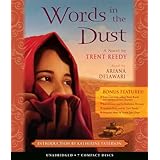
Words in the Dust

Product Details
Bibliography
Reedy, Trent. Read by Ariana Delawari. Words in the Dust. Scholastic Audio, 2012. Audiobook.
image from: www.amazon.com

Summary (from audiobook overview)
"Zulaikha hopes. She hopes for peace, now that the Taliban have been driven from Afghanistan; a good relationship with her hard stepmother; and one day even to go to school, or to have her cleft palate fixed. Zulaikha knows all will be provided for her—'Inshallah,' God willing.
Then she meets Meena, who offers to teach her the Afghan poetry she taught her late mother. And the Americans come to her village, promising not just new opportunities and dangers, but surgery to fix her face. These changes could mean a whole new life for Zulaikha—but can she dare to hope they'll come true?"
I also want to include this from AudioFile Review 
"This story, written by a former American soldier, features an Afghan girl named Zulaikha who dreams of learning to read, marrying well, and living a peaceful life. Narrator Ariana Delawari reads with a slight lisp to reflect Zulaikha’s cleft palate. Delawari’s narration strongly conveys the timidity and strength Zulaikha has developed from living with this defect, the constant hard work of her life, and the loss of her mother when she was very young. Moving fluidly between English and Dari, as does the story itself, Delawari’s performance captures Afghan customs and the challenges of rebuilding a society that has lived so long with war and oppression. This insightful and moving production concludes with interviews with the author and the narrator. A.F. © AudioFile 2012, Portland, Maine"

My Thoughts

I bumped this up on the list to listen to because there was a downloading glitch, and I wanted to make sure I had the entire book (good thing I listened, as indeed, I didn't have the entire book downloaded).

This is Zulaikha's story (a young girl in Afghanistan). She deals with hardships. Even though the story is grim in places, I did find laughable moments. This book just gives me another layer of learning about Afghanistan and Afghan culture.

There are 22 chapters. The narrator did a great job creating different voices for the characters. I appreciated the theme of education being so important. I couldn't help but think of Three Cups of Tea by Greg Mortenson, which I taught a few summers ago to Upward Bound students. I know about the controversy with that book, but what I still agree with is the theme that NO ONE can take away your education! I liked that Zulaikha was not only learning letters and words, but she was also learning about her mother and comes to understand her step-mother.

I'm so glad that I made sure I had all of the files on the download. I would have missed part 7, which is the end of the story, of course, but there were also two "interviews" included by Trent Reedy, the author, and Ariana Delawari, the reader. I enjoyed both "behind the book" conversations and perspectives they give. It really completed the story (and I wondered if these are included in the print version).

This book is more a "middle grade" read than high school partly because of the age of Zulaikha and partly because of the simplification of the "hard issues" involved with the story.