Sunday, March 9, 2014

Shooting Stars: My Life as a Paparazza


I'm reading an ARC. The finalized title of the book is Shooting Stars: My Unexpected Life Photographing Hollywood's Most Famous  


Bibliography

Buhl, Jennifer. Shooting Stars: My Life as a Paparazza. Naperville, IL: Sourcebooks, 2014. Print.

image from:http://d202m5krfqbpi5.cloudfront.net/books/1391410685l/18509676.jpg

My Thoughts

What is our obsession with "celebrities" that allows a photographer to make 1/4 (or more) of my YEARLY salary on ONE PICTURE? Reading this book let me explore the paparazzi's life from the other side of the lens. I know it is their job, and I'm jealous of the literal pay off.

This book spans a little over two years and is Buhl's memoir of her life as a Paparazza. She is outnumbered, out gendered and a novice. However, she does learn the "craft" of working the celebs and getting the photos that count.

Did you know there are actual "rules" of being a pap? There is a "street code" that Buhl learns the hard way, but learns it, she does. There is a relationship between the paps and celebs, too. Even though the paps are annoying, they also keep the celeb current. There is a balance, though, of too much exposure and too much work to attain the photographs. If a celeb is too hard to get, the paps stop trying (mostly). If the celeb seeks out and fishes for paps, there are too many with the same shot so the photos are worth less money.

She also writes, "The intensity with which people crave fame here is unbelievable. I sometimes wonder if I could make more money as a hired pap who gives nobodies the thrill of feeling famous than I do by going after real celebs" (Buhl 112). I think there once was a reality show of this very nature.

As I knew nothing about Buhl or some of the stars she mentions (I Google searched a few of them while reading), it was interesting to see that my conceptions of the paparazzi are not accurate. Sure, there are the ruthless, chase you down until you smash into the tunnel (Princess Di) types that get the attention, but there are thousands of other picture takers just trying to score the next "big" shot. This book opened my mind to have a new connotation with the word "paparazzi." It was also interesting to learn that many paps are from other countries.

Throughout the book, I kept thinking that Adrian (can't think of his last name now, but the actor played in Entourage) and Buhl would end up together. I was surprised when that didn't happen (at least as of the book's printing).

Buhl's conversational voice in the book lets the reader feel like (s)he is right there, "doorstepping" on the celebs or running down Sunset Boulevard. There are several side stories that I wonder if they make it to the final edition of the book.

When she first begins as a pap, her coworker Simon told her that, "No one is your friend in this business" and that rings true as Buhl realizes "how alone I was I this business--and how this business probably wasn't all that different from any other industry. Few people in our world today stick their necks out to right a wrong, regardless of whether it's for a friend or stranger. The paparazzi are no exception" (Buhl 188). However, she does have one friend, Abbey "this woman I've known only a couple of weeks--is the only pap, after a year in the business, to ever stick up for me" (Buhl 207). WOW!

Buhl quits being a pap when she has her son Charlie. He was born the same day (different year) as my husband. I probably will think about Charlie and Buhl this year on their special day.

So, my mind isn't completely changed about the paparazzi, but at least now when I look at celeb photos, I will not only be looking at the star, but also the photo credit and the nuances of the photo. Is this a "money" shot or just another of a thousand boring photos?

Tuesday, February 25, 2014

Wonder

Bibliography
Palacio, R. J. Wonder. New York: Alfred A. Knopf, 2012. Print.
image from: http://media.npr.org/assets/bakertaylor/covers/w/wonder/9780552565974_custom-b8367e7a41f7c527051b3b8024b7924b3e0a113c-s6-c30.jpg


My Thoughts
I saw R. J. Palacio at TLA (even took her picture), but thought, "That's a lower grade book. I haven't read it. I'm not interested." YIKES! I wish I had been interested enough to get her autograph. This was a wonderful read, and I can't wait to pass it on to my daughter.

Wonder is the story of August Pullman. He is starting public school for the first time. He's in the 5th grade. He has been home schooled until now because he has had so many surgeries. There is something not "normal" about his face. He's a genetic abnormality--only 1 in 4 million have this combination of syndromes."August had what seemed to be a 'previously unknown type of mandibulofacial dysostosis caused by an autosomal recessive mutation on the TCOF1 gene, which is located on chromosome 5, complicated by a hemifacial microsomia characteristic of OAV spectrum'" (Palacio 104).  As he introduces himself to the reader, he explains, "I won't describe what I look like. Whatever you're thinking, it's probably worse" (Palacio 3).  August has a great sense of himself and others' reactions to him. He takes it all in stride. He sees even when others pretend not to see him.

The story is divided into 8 parts, with August (Auggie) being the narrator for most of the book. However, we do get insight into other characters' perspectives. There are so many themes in this book that I hope when my daughter does read it, she picks up on a few of them.
  • Be a true friend--always.

  • Don't be one way around certain people & a different way around others.

  • "You don't have to mean to hurt someone to hurt someone" (Palacio 137).

I enjoyed reading this book and hoping that in similar situations, I would have responded with kindness. In fact, on page 299, Mr. Tushman, the middle school director, addresses the graduating class with the idea that they should be "'kinder than is necessary. Because it's not enough to be kind. One should be kinder than needed'" (Palacio 300). I thought about the "Kindness Matters" signs that our National Honor Society sold a year or two ago. Sadly, I probably acted more like the kids who avoided August because of "The Plague" game. I sometimes wish I could go back in time and be nicer to kids who I now understand needed good friends. Man, growing up is hard! I'm sorry Lisa Jones, Raymond Joiner (elementary school) and "Spaz"--I can't even remember his name from my 9th grade typing class. I often wonder what happened to them and how my hurtful actions and words affected them.

The actions of the characters were realistic, heartbreaking, and hopeful. As a reader, I was rooting for Auggie and felt the disappointment he felt, especially the Halloween episode. I cheered for Summer and her "blindness" in being Auggie's friend.

At one "heavy" point in the novel, Auggie is talking to his mom about heaven. He wants to know how people recognize each other. His mother responds, "'They just feel it. You don't need your eyes to love, right? You just feel it inside you. That's how it is in heaven. It's just love, and no one forgets who they love'" (Palacio 227). Well said, Mom!

The title reference is on page 310.

I know at TLA this year, if there are tons of people talking about a certain book, even if it is a "lower grade" book and I haven't read it, I will pay attention and get into the autograph line.

Monday, February 17, 2014

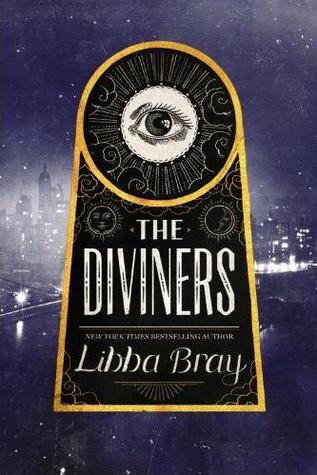
The Diviners

Bibliography
Bray, Libba. The Diviners. New York: Little, Brown, & Co., 2012. Print.
image from: http://d202m5krfqbpi5.cloudfront.net/books/1336424966l/7728889.jpg

My Thoughts
I saw Libba Bray at TLA last year and actually got to have my picture made with her. I bought and she autographed my book later that same day. SO COOL!


The Diviners is part murder mystery, part historical fiction and a whole lot of creepy fun to read. "There is no greater power on this earth than a story" (Bray 407).

The setting is New York City in the 1920s. The book follows Evie O'Neill's story, but mixes in others as it progresses. Something is happening. Something is waking up and casting its shadow over the city. Something  is coming. Perhaps Solomon's Comet is the catalyst or maybe it's just a coincidence. There are several murders in the city that seem connected because of the bizarre nature the victims' bodies are left. Is it possible for a dead man to return to life?

Evie has a special supernatural ability. She can tell things about people through touching something they own. This ability is what actually got her sent to New York to live with her uncle Will--a curator at the Museum of the Creepy Crawlies (at least that's its nickname). It's actually named The Museum of American Folklore, Superstition and the Occult, and it is really a treasure house of oddities, including the two employees. Evie wants to have a good time. She's a modern girl, a flapper. These city murders are putting a damper on her carefree attitude and social life. So are her dreams.

"Naughty John, Naughty John, does his work with his apron on. Cuts your throat and takes your bones, sells 'em off for a coupla stones" is a song that reappears often in the story. The mystery around the song is discovered and explained (but not on this blog!). Naughty John is indeed naughty.

There are many plot lines running through this story. The issues of immigration, gang violence, religious fervor,  moral/racial superiority, patriotism are all scratched in this story. It's quite a lot to read (578 pages!)

The Brethren, "a vanished religious cult in upstate New York" plays an important role in what's happening in the city, including religious symbols, talismans and Knowles' End, a once large estate that falls to the young Ida Knowles to maintain (Bray 208).

Memphis's story was very interesting. His brother Isiah seems to be the "special" one in the family, but I was intrigued by Memphis. He's pretty special, too. I thought there might be some more of the story when the beautiful Theta, the Ziegfeld girl,  and Memphis collided, but Bray didn't explore that storyline as much as I hoped.

Blind Bill was another character that I wanted to know more and find out what exactly were his motives. Was he good? bad? both?

Overall, I liked how Bray weaves the stories together. I'd read almost 200 pages and felt like I was just barely started the story (not a complaint, but quite a compliment). The complaint I do have with the book, though, is the ending. For me, it was not resolved. Well, ok, parts were, but then it seemed to have a chapter that should have been at the front of the book, one that seemed like a shift in authorship--I thought I might be reading a Faulkner novel with lots of detail instead of the conclusion to this story (The chapter is titled "The Man in the Stovepipe Hat," and I missed or zoned out to the connection and who was the man). In fact, now that I think about it, there seemed to be several "loose" chapters that were either throwing "red herrings" to the reader or Bray forgot to connect them (or this reader has forgotten the connection). What exactly is Project Buffalo and how does all of this connect to Evie and Sam? I can't wait to read the second book (coming in March) entitled Lair of Dreams.

In the Author's Note section in the back, I appreciate that Bray writes, "I've tried to remain as faithful as I can to the time period and actual history while crafting a story that includes mystery, magic, monsters. and the unexplained---or as we call that around my house, just another Tuesday" (Bray 581). Libba Bray is so funny!

Thursday, January 30, 2014

The Unbearable Book Club for Unsinkable Girls

Bibliography
Schumacher, Julie. The Unbearable Book Club for Unsinkable Girls. New York: Delacorte Press, 2012. Print.

image from: http://www.goodreads.com/book/show/12858678-the-unbearable-book-club-for-unsinkable-girls


My Thoughts
"Unbearable Book Club
Mother-Daughter Literary Punishment Group
The Mother-Daughter Book Club & Conspiracy League
Literary Enslavement Society of West No Hope
Involuntary Book Bondage Guild
Intolerable Book Bondage Group for Wayward Girls
Unbearable Book Club of West New Hope, DE
Extremely Unbearable Book Club for Irresponsible Girls
Unbearable Literary Society for Impossible Girls
Society of Feminine & Literary Despair
Literary Punishment Guild
Unbearable Literary Society
Book Bondage Unbearable Literary Enslavement Club
Excruciating Reader's Group for Abominable Girls
Literary Trespassers Association for Delinquent Girls
Extremely Unbearable Book Club Meeting #5"
 
These are the names given to the book club as the story progresses. I found it humorous to see the changing title and how the title related to the action of the story. The book club starts because four girls (Cee Cee Christiansen, Adrienne Haus, Jill D'Amato and Wallis Gray) have an AP summer reading assignment. Some of the moms thought it would be fun to create a mother-daughter book club (this sounds like something I would do). The girls wouldn't normally be friends. Their social circles are not the same. Adrienne's mom explains, "It's good to interact with people you wouldn't ordinarily talk to, and read books you wouldn't ordinarily read. Be open-minded. Be willing to experiment" (Schumacher 28). As the story unfolds, I'm not convinced that they all became friends through the book club, even though they shared experiences. 

This is an enjoyable "fluff" book -- something I needed to read after my last book. I appreciated all of the literary allusions. The reading list is AP caliber ("Yellow Wallpaper," Frankenstein, Left Hand of Darkness, The House on Mango Street and The Awakening. I'm not familiar with the Left Hand of Darkness book, but I will order it for the library). There is even mention of my favorite childhood series, The Boxcar Children.

I liked a character's comment that "Books are a distraction but also a comfort" (Schumacher 217).
I liked the characters and found mystery in Wallis (wonder if and hope Schumacher will write another book from her perspective). I enjoyed the feeling of loving books shown in this novel. "I still loved opening a book and feeling like I was physically entering the page, the ordinary world fizzing and blurring around the edges until it disappeared" (Schumacher 5). Yep, I like that feeling, too.
 
At the first book club meeting, Adrienne is asked about what she thinks of the book. She explains:
 

"I found it almost impossible, after I'd just finished reading a book, to formulate an opinion about it. To me, a recently read novel was like a miniature planet: only a few hours earlier I had been breathing its air and living contentedly among its people--and now I was expected to pronounce a judgement about its worth? What was there to say? I enjoyed that planet. I believe that planet and its inhabitants are very worthwhile" (Schumacher 37).

I can relate to that! When I am engrossed in a book, I am there "visiting," and it's hard sometimes, even writing this blog, to pronounce what I thought. I think this is why I take notes and mark pages. When I'm in the book, I'm in, but once I'm finished, I often forget the chuckles and "aha" thoughts and connections I made while reading.
 
Wallis has a goal of reading a book a week. Last year, I read 39 books, which is the most I've read since writing this blog. I thought I'd try in 2014 to read a book a week. So far, I'm behind and the month of January isn't even finished. Adrienne's mother encourages her to "try keeping a list of all the books you read" (Shumacher 95). In 2000, I was getting my English Master's degree and started making a list of the books I'd read. It is interesting to see how my interests focused based on my books read. When working on my library science degree, I had to start this blog. I still keep my list, but now I have this record of my thoughts.
 
I thought it was humorous when Cee Cee explains "most of the books we read for school ended with someone dying, because teachers liked it when their students got depressed" (Shumacher 204). HA! I don't think we really do, it was funny to see that perspective.
 
Each chapter defines a different literary term (this is part of the summer reading assignment--to define & identify literary terms and a clever way for Adrienne to complete the task.). I found the last chapter's term and definition to be accurate. "Resolution: The part of the book you spend a lot of pages waiting for; the part where you get your questions answered. (But I'm not sure if that's true in my essay.)" (Shumacher 215). As a reader, I don't have to have everything answered, but I hate spending "a lot of pages waiting for" something that doesn't happen. It is frustrating. I wasn't frustrated at the end of this book, even though there are a few unanswered questions.  


Wednesday, January 22, 2014

Tweak

Bibliography
Sheff, Nic. Tweak New York: Ginee Seo Books, 2007.

image from:http://static.oprah.com/images/bookfinder/jackets/200708-omag-book-nic-sheff-284xFall.jpg


My Thoughts
I thought I'd better read this book if I was going to have it on the library shelf. Part One of the book was intense, and I really questioned whether I would put this out or not. I even looked up why I bought it (it is on the Outstanding Books for the College Bound list along with his dad's book Beautiful Boy). In fact, until I read Part Two of the book, I was not going to shelve it.  

This detailed, non-fiction book is not for the faint of heart. There are very graphic scenes of sex and drug use. I was afraid that my student readers would read this as a "how to" or as an endorsement that this type of behavior is acceptable. I won't promote this book (and I'm not sure why because I do have kids reading Ellen Hopkins and her stuff is gritty, raw and real). There is something that doesn't set with me about this book. I'm afraid the message Sheff is making through this memoir won't get to the audience.

Part One is a roller coaster of high after high, broken promises, hustling, drugs and more drugs. He started using meth when he was eighteen. This was after trying several other drugs and living an "overexposed" (adult) lifestyle as a child (Sheff 160). He "dropped out of college twice, my parents kicked me out...I broke into their house...I stole hundreds of dollars from the register...got arrested for a possession charge" (Sheff 5). He felt like he was "held captive by some insatiable monster that will not let me [Nic] stop" (Sheff 6). But the fact is, he doesn't want to stop (Sheff 20). He keeps in this vicious circle in spite of the many people who tried to help him. It made me so mad as a reader because I know it feels like to try and help someone who doesn't want or accept the help. Nic tries to stop, but he really doesn't. He often seemed like, "Oh well, can't stop, so I'll just keep enjoying it." He claims the meth "is more powerful than anything" (Sheff 34). Addictions of any kind are like this. He doesn't like who he is, both physically ["there's something about outward appearances that has always been important to me" (Sheff 36)] and inside his mind. He is a perfectionist, so when he can't be perfect, he excuses his behavior. This really upset me. Nic is a "good" kid with so many opportunities and privileges that he is just throwing away because of drugs. His "friend" Gack explains that the constant hunt for the next high is "living. Every day is an adventure" (Sheff 123). This is a sad, terrifying way to live life. The first part of the book ends with Nic praying to a god in which he doesn't believe and going back home (Sheff 125). His friend/sponsor Spencer will help.

Part Two starts with chipper Spencer getting Nic back on his bike. (Truly a metaphor here!). Spencer tells Nic to write down "a list of all the things you want out of life" and "in one year from today, one year, if you follow this program to the best of your ability, you will have everything you wanted and more" (Sheff 134). There is hope, but Nic doesn't believe it. "There's no way I can get these things--there's just no way" (Sheff 136).  Spencer tells Nic to be patient and talk to God. "The longer I experiment with relying on God, the more I will come to believe. So I try it. I ask God for help in every aspect of my life, even if I don't really believe it" (Sheff 144). As a reader, I'm hopeful and skeptical. He is clean, working a steady job and "for the first time ever, I want to take responsibility for myself and the effect I have on others" (Sheff 171). Hallelujah! Spencer tries to explain to Nic that "being sober isn't just about not using. Being sober is about the joy of a life of clarity and living by spiritual principles can bring" (Sheff 173). Things are going great until Zelda reunites with Nic. The longer they are together, the more Nic turns away from being clear headed. Nic even asks himself "What the hell is wrong with me? I have so much and I always want to throw it away. Why am I this way?" (Sheff 153). I feel for his struggle here. However, he's quite childish in his stubbornness that no one sees in her what he sees. [This should be a warning. If everyone else is telling you to get away from him/her, GET AWAY!]. Nic absolutely becomes consumed by Zelda and starts using drugs again. As the story built up, I knew exactly where that relationship was heading. Nic even tries to say it is "God's will for me....I don't want to hear anything different and I don't ask for any validation" (Sheff 208). NO! NO! NO! I don't even want to write about Nic's life with Zelda. It's immature and superficial. Nic explains that he "lashes out at everyone who tries to help me, just trying to scare them away so they can stop giving a damn about me and let me throw my life away in peace" (Sheff 259). This is Nic's mental attitude, and it's heartbreaking. Nic FINALLY realizes "I can't go with Zelda. I'll just get high again and all these days of hell in detox will have been wasted" (Sheff 284). Finally, he's getting it, even if he say he's going to "play this rehab game perfectly" (Sheff 292)!

The book is written in present tense, even though it is a memoir. As a reader, I felt like I was in the moment with Nic. I was happy when he was clean and disappointed when he used. The end of the book was disappointing to me. I've just endured 300+ pages to be left with part of the "family weekend" at rehab complete. This made me mad. I know I can do some research and find out where Nic is and how he's doing today. The epilogue had him moving to Savannah and working on this book. I really want to know what happened to Spencer.

Interestingly, a book that I was unsure of seems to draw much out of me for this post.

Thursday, January 16, 2014

A Painted House

Bibliography
Grisham, John. A Painted House. New York: Doubleday, 2000. Print.

image from: http://houseput.com/img/Books/a-painted-house-by-john-grisham-isb.jpg
My Thoughts
This is my book club pick for our current read. Even though I can't attend discussion night, I wanted to read it, as I haven't ever read any books written by John Grisham. Of course, I took notes as I read, but when I finished, I also wrote down some thoughts and feelings.

I overall enjoyed the storytelling and the humor of the story. I envisioned the place--in fact, I know the place. I feel like I've spent time with my grandparents on their farm (and I'm luck to have felt them with me as I read). My dad is the narrator, Luke (even though my dad has more brothers and a sister). The characters are believable. I did not grow up picking cotton, but I've heard my family talk about it. When I was growing up, my grandparents were not actively farming, but they were still farmers. They had two gardens that we worked. They had to drive to town to buy anything and attend church. These were special times when we got to tag along. I've sat on the porch to wind down the day, discussing everything in life and nothing at all. Shelling peas. Waving to passersby. Learning scripture. Learning about life.

The story takes place during harvest time of 1952. Luke Chandler and his parents (Jesse & Katherine) live with Luke's grandparents on their Arkansas cotton farm. They hire some "hill people" and Mexicans to help harvest the cotton. Having these two groups stay on the farm creates some varying & intertwines story lines. I predicted one major event between "Cowboy" and Tally. However, the nearby Latcher family provided an unexpected twist to the story. Actually, there were two twists involving the Latcher's.

Seven year old Luke knows he does not want to be a cotton farmer. He knows the more people helping means less cotton he has to pick. He's happy for the help.

I thought the distinctions between the Baptists and the Methodists was humorous and sometimes truthful. When the migrant workers arrive, some of the townspeople are livid of the conditions the workers faced to get there. Luke explains, "I could tell Pearl couldn't wait for us to clear out so she could find her church friends and again stir up the issue. Pearl was a Methodist" (Grisham 17). Yep, Methodists are into fair conditions for people. "Most things were sinful in rural Arkansas, especially if you were a Baptist. As a general rule, the merchants and school teachers worshipped there [Methodist church]. The Methodists thought they were slightly superior, but as Baptists, we knew we had the inside track to God" (Grisham 83). HA!

The title reference starts on page 21. Luke's mom was "almost a town girl" and was "raised in a painted house" (Grisham 21). The distinction of the painted house is important. By having a painted house, you have the expendable income that most cotton farmers didn't enjoy. This theme of the painted house continues when Trot, one of the hill people, begins to paint the Chandler house. It is an extravagance that turns out to be accepted, including from Pappy Eli.

When I finished the book, I literally cried. I didn't cry for the events of the story, but I cried for the memories of my grandparents. I've passed this book on to my dad. It may be too close to home for him to like as much as me.


Wednesday, January 1, 2014

Cinder

Bibliography
Meyer, Marissa. Cinder. New York: Feiwel and Friends, 2012.

image from: http://www.dclibrary.org/sites/all/files/styles/large/public/cinder_2.jpg

My Thoughts

Cinderella as cyborg. Yep, I've read the book.

The first thing that drew me to this book was the cover. It is beautiful! The next thing that drew me to this book is I got to hear Marissa Meyer speak at two separate sessions at TLA this year. I became interested in reading The Lunar Chronicles. Thirdly, Meyer signed my book. Now, I must read it.

This is a Cinderella retelling, but it isn't. Yes, the main character's name is Cinder, and there is a handsome prince and a lovely ball to attend. There is also a wicked stepmother and stepsisters to contend with, but the story is more than this. The backdrop of the familiar story lends itself to a new story--one of a futuristic, empowered girl who is not all that she seems. There is the ever-present good versus evil story line that all fairy tales must explore.

"She kept her head high, even as her eyes stung, even as panic filled her vision with warnings and precautions.

It was not her fault he had liked her.

It was not her fault she was cyborg.

She would not apologize." (Meyer 338).


The Eastern Commonwealth is in negotiations with the Lunars. "Lunars were a society that had evolved from an Earthen moon colony centuries ago, but they weren't human anymore. People said Lunars could alter a person's brain--make you see things you shouldn't see, feel things you shouldn't feel, do things you didn't want to do. Their unnatural power had made them a greedy and violent race, and Queen Levana was the worst of all of them" (Meyer 43). Lunars have a problem with mirrors (explained in the story). This interaction between worlds provides a secondary story line to Cinder's story. The Lunars are the reason a plague has come to the Commonwealth, and it will be the Lunars who help find the cure. Of course, the evil queen's idea of a negotiation is to do what she wants--marry her.

Unlike the "usual" version of Cinderella, Cinder and the prince meet prior to the fancy ball. In fact, Prince Kai invites Cinder to be his "personal guest at the ball" (Meyer 164). Of course, Cinder doesn't plan to go, or rather, her wicked stepmother doesn't plan to allow her to go! Of course, our heroine prevails and does make it to the ball.

Even though this is a futuristic novel, there are qualities of "now" present in the book. For one, the story's setting takes on an Asian location. In the Q & A section of my book, Meyer explains that the earliest Cinderella story actually came from 9th century China. I didn't realize this. Each person, including cyborgs have in ID chip implanted in their wrists. This chip allows access to "money accounts, benefits, licenses" which made me think of Social Security card numbers (Meyer 169).

There were a few things I suspected to happen that did (of course, Cinder is the...oh, wait, don't want to spoil it here). I think Meyer gave too many obvious clues for me (but this might be perfect for a YA audience). It is fun to think something might happen, or how a story will all fall in place, and then it does. The ID chips did make me suspect that Cinder might be, well, I can't say. But I will state that I suspected at page 170 some of the outcome in the book. One of these outcomes is revealed on page 175 and another on page 240. Dr. Erland was exactly was I expected him to be.

I also kept thinking about Star Wars while reading this book. I'm not sure if it was the android connection (both stories main characters fix them) or just those common archetypes showing through.

Meyer sets up more stories with Queen Levana. Cinder knows something about her power "a perfect illustration overlaid the perfect woman--and they were not the same" (Meyer 361). I thought of Langston Hughes' poem, "We Wear the Mask."

There was no sex or language issues that I recall. There is a kissing scene at page 349.