Wednesday, November 6, 2013

Allegiant

Bibliography
Roth, Veronica. Allegiant. New York: Katherine Tegen Books, 2013. Print.
image from: http://thedivergenttrilogy.com/wp-content/uploads/2013/05/photo-1.jpg


My Thoughts:
This is the third book in the Roth trilogy. I read the first two installments of the story this summer (one of the best stories I read!), so I was counting down until I could buy this book.

Tris and Four are the narrators of this tale. At first, I didn't like the flipping back and forth, especially if I had to stop reading during a chapter. When I came back to read, I had to remember which voice I was reading. However, I did like seeing more of Four's internal struggles and his thoughts.

This book did not disappoint, even though I didn't like some things that happened. I know it had to happen, and since I've had a couple of days to think about it, I know that Roth kept true to her characters. This is a solid story, and even though it is dystopian, it is not so far removed that it isn't possible. I believe some kind of BUREAU OF GENETIC WELFARE probably exists.

There are several twists and turns that kept me saying, "OOOHHHH!" We get some back story on both Tris' and Four's parents. We realize that great inventions can also become deadly weapons.

Some questions I kept thinking about while reading is how do we know what the truth really is? Who can we believe to give accurate information? Who can we trust? Which side is the "right" side? Roth does a great job examining humanity and showing the reader that not everything is easily decided.

I marked so many pages in this book, that my coworker laughed. She asked what I marked. I flag things I want to remember, things I think are foreshadowing, things I thought were funny and things that are ponderable. I like the way Roth explains and describes.

For example, here are some things I marked (without any spoilers or clues):

  • "I wonder if fears ever really go away, or if they just lost their power over us" (Roth 91).
  • "People are just divided by different things, fighting different wars" (Roth 249).
  • "I think that no matter how smart, people usually see what they're already looking for" (Roth 256).
  • "I wonder if this is how it is with all evil men, that to someone, they look just like good men, talk like good men, are just as likable as good men" (Roth 321).
  • "When you control information, or manipulate it, you don't need force to keep people under your thumb. They stay there willingly" (Roth 346).
  • "I stay with him because I choose to, every day that I wake up...I choose him over and over again, and he chooses me" (Roth 372). This one made me think about my marriage. Yep, we choose each other, and it's work, but the work is worth it!
  • "To me, grief is a devastating numbness, every sensation dulled" (Roth 503). I can relate to this. I recently lost an uncle, and numb is the best word I can describe how I feel.
The title reference first appears on page 20.

I am so happy I found this story! A friend recommended Divergent to me a few years ago. I didn't pick it up, didn't pick it up, didn't pick it up. Finally, I picked it up. Now, it's my go to recommendation book. Well done, Veronica Roth! I can't wait to see what you come out with next.

Friday, October 25, 2013

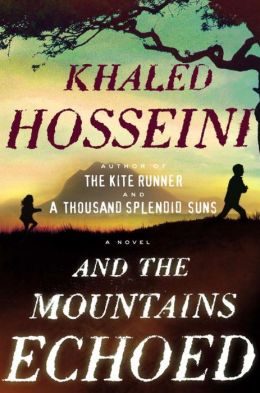
And the Mountains Echoed

Bibliography
Hosseini, Khaled. And the Mountains Echoed. New York: Riverhead Books, 2013. Print.
image from: http://img1.imagesbn.com/p/9781594631764_p0_v5_s260x420.JPG


"This is what aging is, these random unkind moments that catch you when you least expect them" (Hosseini 231).


My Thoughts
I love the way Hosseini tells a story! This book tells many stories and had me interested in the opening chapter when a father tells a story to his two children to illustrate a hard truth: sometimes difficult choices are made to benefit the "greater good."

The main themes of this book are abandonment and penance. Many characters are disfigured as well. This may be a physical or psychological manifestation.

The main characters of this story are brother & sister Abdullah & Pari. However, the book spans several generations and travels to several countries and includes multiple characters. I was interested in learning about the various cultures, and Hosseini gives glimpses without having to explicitly explain.

Pari collects feathers as a young girl. Her brother Abdullah protects her & collects the feathers. Upon Abdullah's death, his daughter Pari finds a box full of feathers. Sadly, the daughter doesn't understand the significance, but the reader gets it! WOW!

Chapter Four begins a letter from Nabi to Mr. Markos, but it is really meant for Pari. I felt a range of emotions about Nabi while reading this "confession" and began to understand some connections between the characters. Nabi's letter is the "meat" of the story, and it is juicy!

There are several flashes of time in this book. The author breaks it up visually. I could see this story being put on the big screen very easily because as I read, I had the fade back moments. Sometimes, the breaks were distracting or rushed the story. The one element that ran throughout the book is that there are no coincidences. People are put into our lives for reasons, experiences shape us, and somehow, we are all connected. Someone at my book club described this as Hosseini weaving the threads together. This book is universal because it focuses on the human connection and the complexity of good and evil.

I was taking notes as I read, but then I started marking up the book. This is one I will reread and am glad I bought my own copy. This is also a book the reader needs to experience. My words will not express the beauty of this story.

Thursday, October 10, 2013

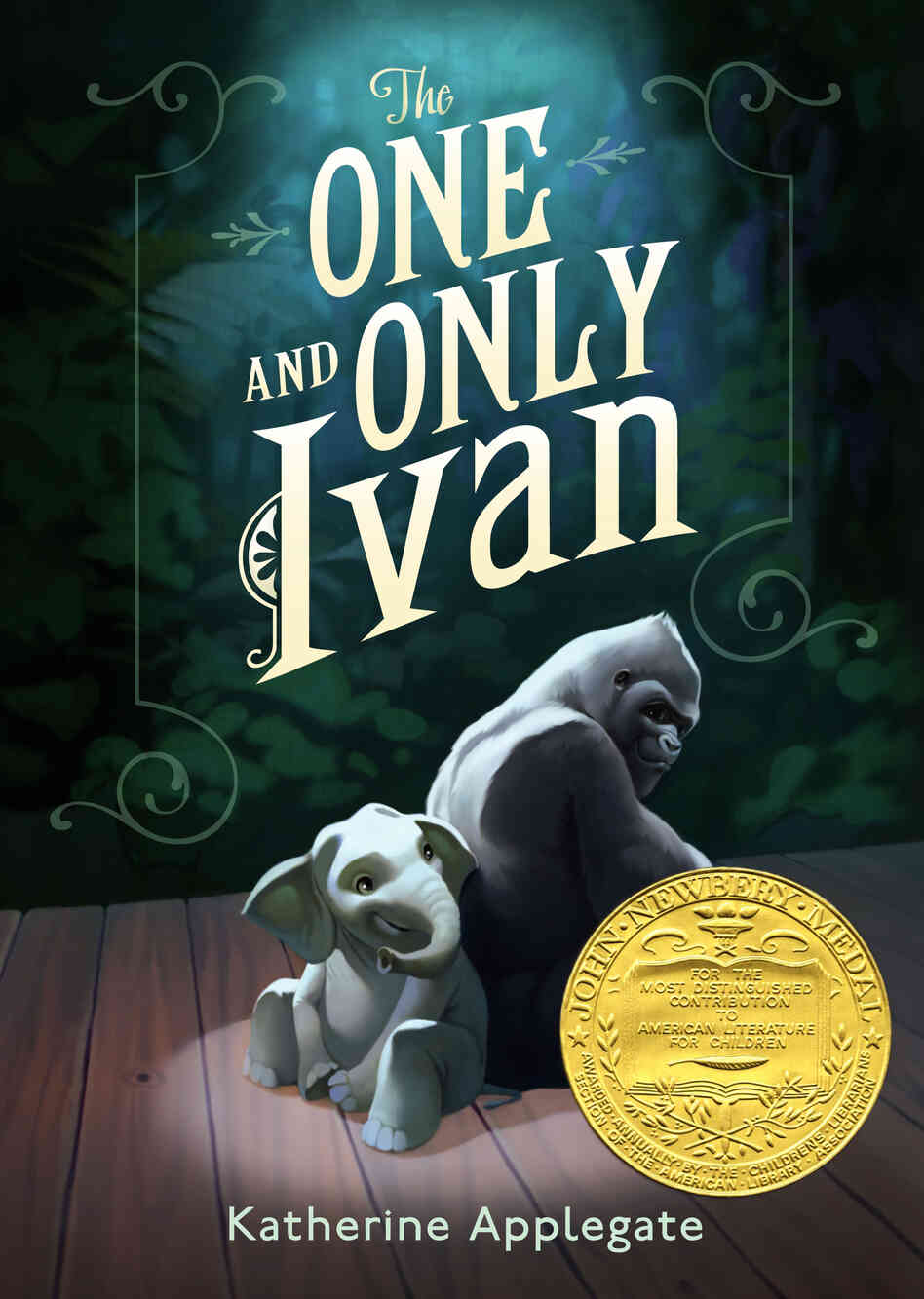
The One and Only Ivan


Bibliography
Applegate, Katherine. The One and Only Ivan. New York: Harper, 2012. Print.
image from: http://media.npr.org/assets/bakertaylor/covers/manually-added/one-and-only-ivan_custom-91a7b2ad0737f02bbbb6729412e1aa4de048c3f9-s6-c30.jpg

My Thoughts
I kept seeing "buzz" about this book on my library list serv, so I looked it up and found that is was a "juvenile" book. I contacted the elementary librarians and asked to borrow it. All of their copies were checked out, but one would send the book to me when it returned.

I got it Tuesday and started reading it that night. It was such a cute story. Ivan is a silver back gorilla that was captured as a young animal and raised with humans. His "father" Mack now keeps him in a "domain" at the mall along with Stella the elephant and Snickers the trick dog. Bob is also there, even though he is "homeless" and wonders in to sleep on Ivan's belly. Later in the story, Ruby joins the attractions.

The opening chapter is "Hello. I am Ivan. I am a gorilla. It's not as easy as it looks" (Applegate 1). Indeed, as you read the story, you understand that being a gorilla is complex. Ivan and his sister Tag were captured as young gorillas. Ivan survived. He is an artist and explains that he draws things in his cage. "I often eat my subjects before I draw them" (Applegate 17). A human named Julia comes each day to the mall, as her dad George is the custodian. Julia is an artist, too, so she understands Ivan's drawings. Julia's understanding actually creates a conflict in the story.

Ivan is smart and thoughtful and funny. He shows the reader the human race through another species' eyes. "At times...I wish humans could understand me the way I can understand them" (Applegate 22). When a little boy remarks that Ivan must be lonely, Ivan wishes he could tell the boy,"With enough time, you can get used to almost anything" (Applegate 22). How true, Ivan.

Ivan isn't the only wise one in the mall. Stella the elephant shows her wisdom when she remarks that "old age is a powerful disguise" (Applegate 31). Stella and Ivan are pals, and Ivan makes a promise to help the baby elephant Ruby. Stella is a wonderful story teller because she doesn't forget anything. "I always tell the truth. Although, I sometimes confuse the facts" (Applegate 66).

The first chapter hooked my daughter into wanting to read this book. Well, I actually read some of it to her before going to sleep at night, which I enjoyed sharing the story with her. I don't know how much longer my little girl will let me read to her. Yesterday, she told me she finished the book at school. She really enjoyed it, and so did I.

Tuesday, October 1, 2013

The Lovely Bones

Bibliography
Sebold, Alice. The Lovely Bones. Boston: Little, Brown & Co., 2002. Print.
image from: http://images.wikia.com/thelovelybones/images/5/5d/The_Lovely_Bones_book_cover.jpg
 

My Thoughts
OH MY GOODNESS! This book scared me!

Susie Salmon is murdered in 1973. She was fourteen years old. After her death, she goes to heaven and is able to tell the story of her family from her eye on the world.

This book is part mystery, part romance, part speculation and all very compelling! I can't wait to watch the movie to see if it is creepy as the book. I visualize what many of the characters look like, including the recluse neighbor Mr. Harvey.

I love how Susie is the omniscient narrator. She sees everything her family is doing and reacts as the reader would watching something that we could not fix.

When Susie's brother Buckley is in the seventh grade, "his favorite teacher was not really a teacher at all but the school librarian, a tall, frail woman with wiry hair who drank tea from her thermos and talked about having lived in England when she was young" (Sebold 253). Yes, librarians do make a difference, even if we don't all drink tea from a thermos!

Buckley has a special connection to Susie. He can see her, and even talks to her. "'Please don't let Daddy die, Susie,' he whispered. 'I need him'" (Sebold 260). I buy into this idea. I "talk" to my angels all of the time!

Ruth's character was interesting, but I had a hard time buying into the supernatural sex scene. Of everything written in the story, this was the most unbelievable element for me.

The ending was sad and happy at the same time. Susie and her family do get some resolution. The charm bracelet on the cover is relevant to the story.

The title reference is on page 320.

SPOILER: I was mad at how long Mr. Harvey lasted, but I was happy when he did finally die. That's one less creep on the move. When Sebold writes, "George Harvey had evaporated into thin air when he hit the property line. He [Len]could find no records with that name attached. Officially, he did not exist" (Sebold 218). This startled me. How many people are among us that don't "officially" exist?  

Sunday, September 15, 2013

Dear Teen Me

Bibliography
Anderson, E. Kristin, and Miranda Kenneally, eds. Dear Teen Me. San Francisco: Zest Books, 2012. Print.
image from: http://www.goodreads.com/book/show/12479640-dear-teen-me

Dear Teen Me: Authors Write Letters to Their Teen Selves

My Thoughts
I'd been hearing about this book, so I ordered one for the library. A few kids checked it out, but it didn't fly off the shelf like I hoped. At TLA this year, I bought myself a copy since I could get it signed by E. Kristin Anderson (yep, this is one I didn't give away to my students). So, it has been on my "summer reading" stack. Now that I've read it, I can book talk it and more kids will read it. I have some in mind that I want to make sure they do!

This book is a collection of letters that various authors are writing to themselves. I noticed two things: many of the authors have Texas connections (yea!), and I felt like I was reading my own past. It amazed me how many similar situations these authors had with my own teenage years. If I could craft a letter to my teenage self, I would include some of the same advice these writers did. This book really made me think about my teenage years. What would I do or not do? How would I take those "lessons" and live through them when it seemed impossible at the time? I kept thinking about people I shared the hallways and classrooms with that I never really knew, and how unfortunate that is. I kept thinking of my best friends in high school and how we leaned on each other through those trying years (and some of them are still best friends!).

I liked that some of these writers I've never heard of, but I shared their stories. I was surprised by a few writers that I did know (Ellen Hopkins' story was unexpected.) and enjoyed getting a better glimpse into their personal lives. I liked the pictures because they mostly looked familiar, too.

As an adult reader, who thankfully survived the teenage years, I could appreciate this book.
For a teen, I think this book gives hope. I can't wait to share it with them (and I might be buying a few copies for some friends to relive their teen years).

As I finished the book, I found out there is a "Dear Teen Me" blog. Yep, I've started following that, too.

Sunday, September 8, 2013

Little Chapel on the River

Bibliography
Bounds, Gwendolyn. Little Chapel on the River. New York: Harper Collins, 2005. Print.
image from: http://www.gwendolynbounds.com/images/Littlechapel_hc-330-exp.jpg


My Thoughts
I believe that I read books when I am supposed to read them. I just finished this book, and it occurred to me today that this week is 9/11. The event is a catalyst that made this story even happen....strange how I read it and finished the book so close to the anniversary of the devastation. When I started this book, I had no idea. This was another ARC that I decided this was the summer to read it!

This turned out to be non-fiction, but it reads like a novel. The author Gwendolyn (Wendy) lived in NYC just blocks away from the World Trade Center. When the terrorists attacked, she was forced to leave her apartment. She ended up renting a house in Garrison, New York--a commuter train ride away from the city. Bounds worked at The Wall Street Journal. This training helps her capture the essence of Garrison, and more specifically the Irish pub, Guinan's, in this sleepy book with surprising life revelations.

Guinan's is not only the local pub, it is the place where quite a collection of characters come for comfort and safety and "family." Jim Guinan is the proprietor. His battle with diabetes puts the future of the bar into question. What will become of this place if Jim dies?

Each of the regulars have reasons for coming to Guinan's. The writer herself becomes attached and works the store to help the family. Guinan's is the "chapel" of the community. (The title reference is on page 57). It is a simpler place, yet the longer Bounds is there, the more she understands that these people are more than their first impressions. In the city, she had "all these gadgets in the world to help [her] save time, and yet somehow there was never enough time for everything" (Bounds 59). She genuinely gets to know and care for the "regulars" in the bar and even "wonders if all [her] smart gadgets have actually made [her] stupid" (Bounds 132). 

Each chapter has a title that threads the story. My favorite title is "Human duct tape."(Bounds 222). She explains that "bit by bit the human duct tape that keeps this place together tightens its hold" (Bounds 222). I love the imagery.

I enjoy Fitz's "heh, heh, heh" and the curmudgeonly, gruff exterior he presents.   I admire John & Margaret's devotion to their dad. I like how as Bounds realizes things at Guinan's, she weaves her own narrative to the story, and they actually become one thread instead of two.

My personal revelation character is Walter. At first, I thought him a bit eccentric. Then, I realized that Bounds was describing my dad. Walter explains all of the work needed to repair nail pops in the wall. When Wendy questions the amount of work involved, Walter, just like my own dad says, "It's the RIGHT way to do it. Haven't I taught you anything?" (Bounds 241). Later Wendy hears in her head Walter saying, "If you take care of it, it will take care of you" (Bounds 255). My dad says, "if you take care of it, it will last forever."

So, another advanced reading copy in my stack that finally got read. The writing is vivid and I feel like I enjoyed a pint at the bar with the regulars. I wondered about the bar and found that Bounds has a blog. This is what is posted there, "'Is the chapel still around?' That's the first thing readers ask after finishing my book Little Chapel on the River. about Guinan's Pub & Country Store in Garrison, N.Y. For a long, sweet while, the answer was 'yes.' But on January 31, 2008, Guinan's closed after nearly 50 years of defying time and predictions thanks to the generosity of the family who ran it."  I'm glad that Bounds visited and recorded the history of the place as she learned it , and I'm glad I got to "visit" the place through her book.


Saturday, September 7, 2013

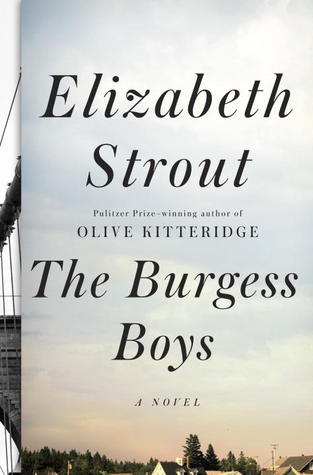
The Burgess Boys

Bibliography
Strout, Elizabeth. The Burgess Boys. New York: Random House, 2013. Print.
image from: http://d202m5krfqbpi5.cloudfront.net/books/1351213545l/15823461.jpg

Plot summary (from the inside cover)
"Haunted by the freak accident that killed their father when they were children, Jim & Bob Burgess escaped from their Maine hometown of Shirley Falls for New York City as soon as they possibly could. Jim, a sleek, successful corporate lawyer, has belittled his bighearted brother their whole lives, and Bob, a Legal Aid attorney who idolizes Jim, has always taken it in stride. But their long standing dynamic is upended when their sister, Susan--the Burgess sibling who stayed behind--urgently calls them home. Her lonely teenage son, Zach, has gotten himself into a world of trouble, and Susan desperately needs their help. And so the Burgess brothers return to the landscape of their childhood, where the long-buried tensions that have shaped and shadowed their relationship begin to surface in unexpected ways that will change them forever."

My Thoughts
My book club picked this book to read. We'd read Strout's Olive Kitteridge, so I was excited to read another story by the same author. 

This is the story of siblings Jim, Bob & Susan Burgess. I wrote my thoughts, and then realized that if you read this blog, you might not have a clear idea of what the book is about, so I included the inside cover description. I'm always afraid to give too much away when I'm writing about a book. Usually my "My Thoughts" section is a personal reaction to what I've read or interesting revelations I saw through the characters. I seem to always learn something from reading a book, whether I liked the story or not. I liked this story.

Bob & Susan are twins. Jim is the older, protective brother. "Your Uncle Jim will take care of you. That's what he does" (Strout 158). Each sibling has a story--a past that has created their present. However, when one sibling confesses that the remembered past is not accurate, each of their lives shift. This is a huge tectonic shift! One truth can change a person.

Strout creates three dimensional characters in a mostly believable story about multiple generations of a family.  What seems like a "slice of life" story actually carries through years. Readers can relate to this story because we all have some degree of dysfunction in our families.  We might not share the same story, but we can relate to the circumstances.

The sub-story that brings the siblings together is that of the awkward teenager Zach . He has done a bone-head act against the Somali community that now lives in his hometown. This act now has him facing federal charges.  Big brother and lawyer Jim will take care of this. He thinks.

I kept thinking about the research Strout must have done to write this story. Who just knows that the Somali people didn't have a written language until 1972 (Strout 130)? There are many layers to the story that would require some research (Somali, parasites, expressions). There was a lot going on in this story (which is divided into four books).  There are several characters that seem minor, but play a pivotal role in the narrative. Nothing is mentioned in the plot summary of Pam, Helen or Steve--the people who married into the Burgess Family. I marked several things the characters did and said. I felt like I visited Shirley Falls, Maine.

I liked the way the story unfolds. It is not predictable. Life isn't. Thanks to Elizabeth Strout for another enjoyable story.